INDUSTRY OVERVIEW
What makes SaaS enterprise-grade.
Selling software to large organizations raises the bar — on security, reliability, and proof. This is what "enterprise- grade" actually means under the hood, and why it matters from day one.
THE SHIFT
The enterprise bar keeps rising
Selling to an enterprise means passing through procurement, security reviews, and legal — often before anyone touches the product. Buyers expect single sign-on, audit logs, data residency options, and a stack of compliance certifications, and they expect uptime measured in "nines."
These aren't features you bolt on later. Multi-tenancy, security, and observability shape the architecture from the first decision, and retrofitting them into a product built for small customers is slow and risky.
In the enterprise, security and reliability aren't a tax on the roadmap — they're what unlocks the deal.
THE PRESSURES
What enterprise buyers demand
● Security & identity
SSO, SCIM provisioning, encryption, and least-privilege access are table stakes.
● Compliance proof
SOC 2, ISO 27001, HIPAA, or GDPR evidence, ready before the contract is signed.
● Reliability & scale
High-availability, multi-region deployment, and SLAs that hold under real load.
● Tenant isolation
Confidence that one customer's data can never leak into another's.
HOW IT FITS TOGETHER
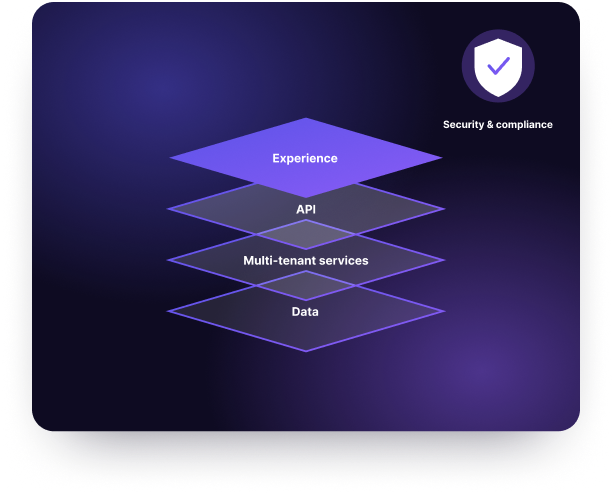
The enterprise SaaS stack
Security & Compliance
Experience layer — web & mobile UI, SSO sign-in
API & integration layer — public API, webhooks, connectors
Multi-tenant services — isolation, RBAC, billing, autoscaling
Data layer — encrypted storage, backups, multi-region
Illustrative reference stack. Real architectures vary by product and requirements.
Security & Compliance
Experience layer — web & mobile UI, SSO sign-in
API & integration layer — public API, webhooks, connectors
Multi-tenant services — isolation, RBAC, billing, autoscaling
Data layer — encrypted storage, backups, multi-region
Illustrative reference stack. Real architectures vary
by product and requirements.
WHERE TECHNOLOGY HELPS
Designed-in, not bolted-on
Multi-tenancy keeps customers isolated while sharing infrastructure efficiently. Identity integrates with the SSO and provisioning tools enterprises already run. Observability — monitoring, audit logs, alerting — proves the system is healthy and accountable.